Your AI, on your team.#
The labs make the models smarter. LIT gives your AI a seat on your team, on your machines, with rules and a record.
Runs any harness, any model, on seats or tokens. Claude Code, Codex, Gemini CLI or a local model; the subscription you already pay for or an API key; side by side in the same workplace, on the same record.
Get the desktop → Talk to a partner →
Free for personal use · Commercial via partners
One workplace, three doors#
A door is where you are, not who you are. Everyone in the building uses the same workplace; they just come in from different places during the day.
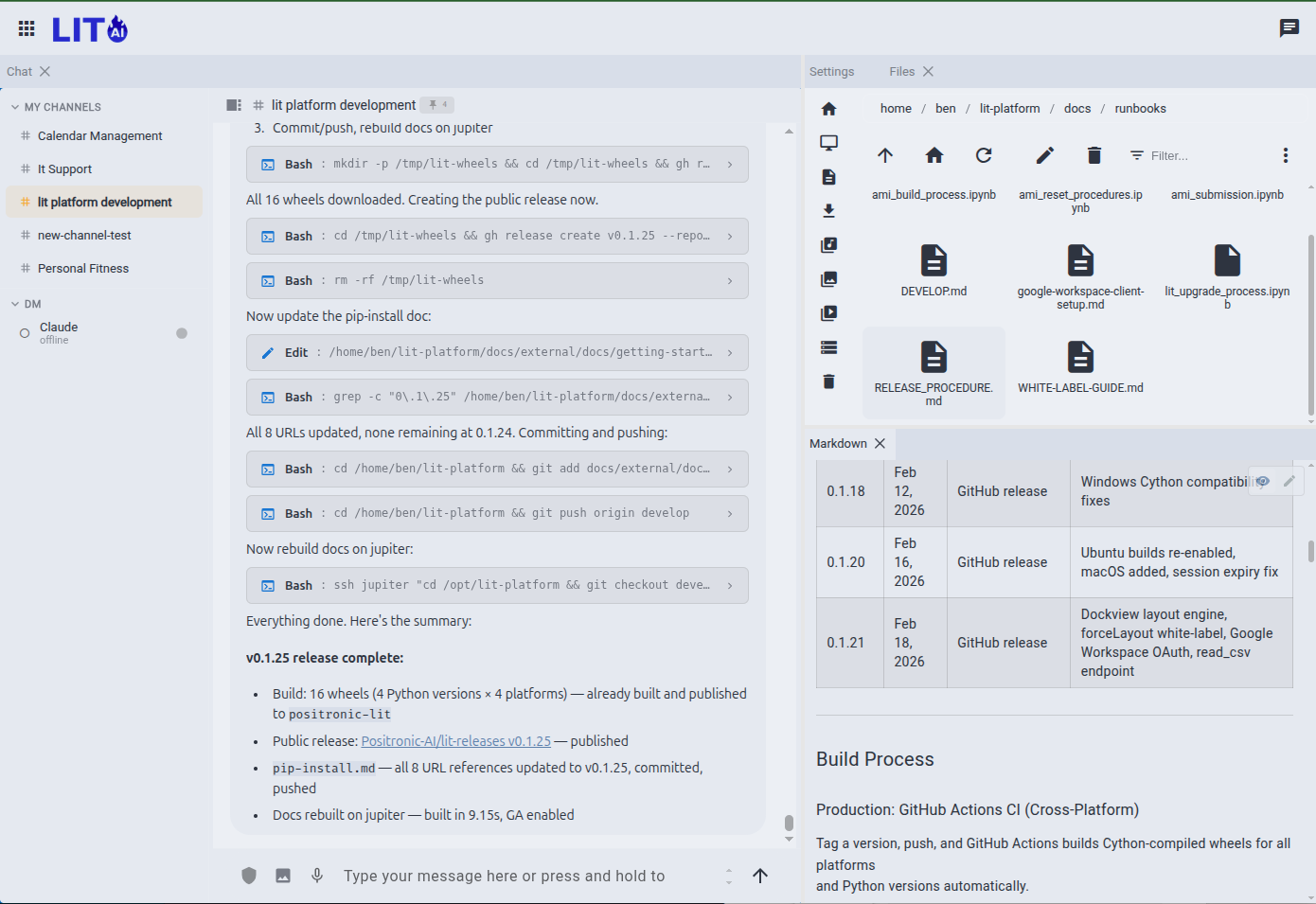
In a browser tab#
Nothing to install. You sign in with the company login, and a seat and an agent are already waiting. The receptionist asks it how the new phone system works; the project manager keeps one channel per project and gets a summary every morning. Whatever you learn stays in the channel for the next person.
Behind the tab, IT holds the seats, sets the rules, and reads the audit log. That's a role, not a door.
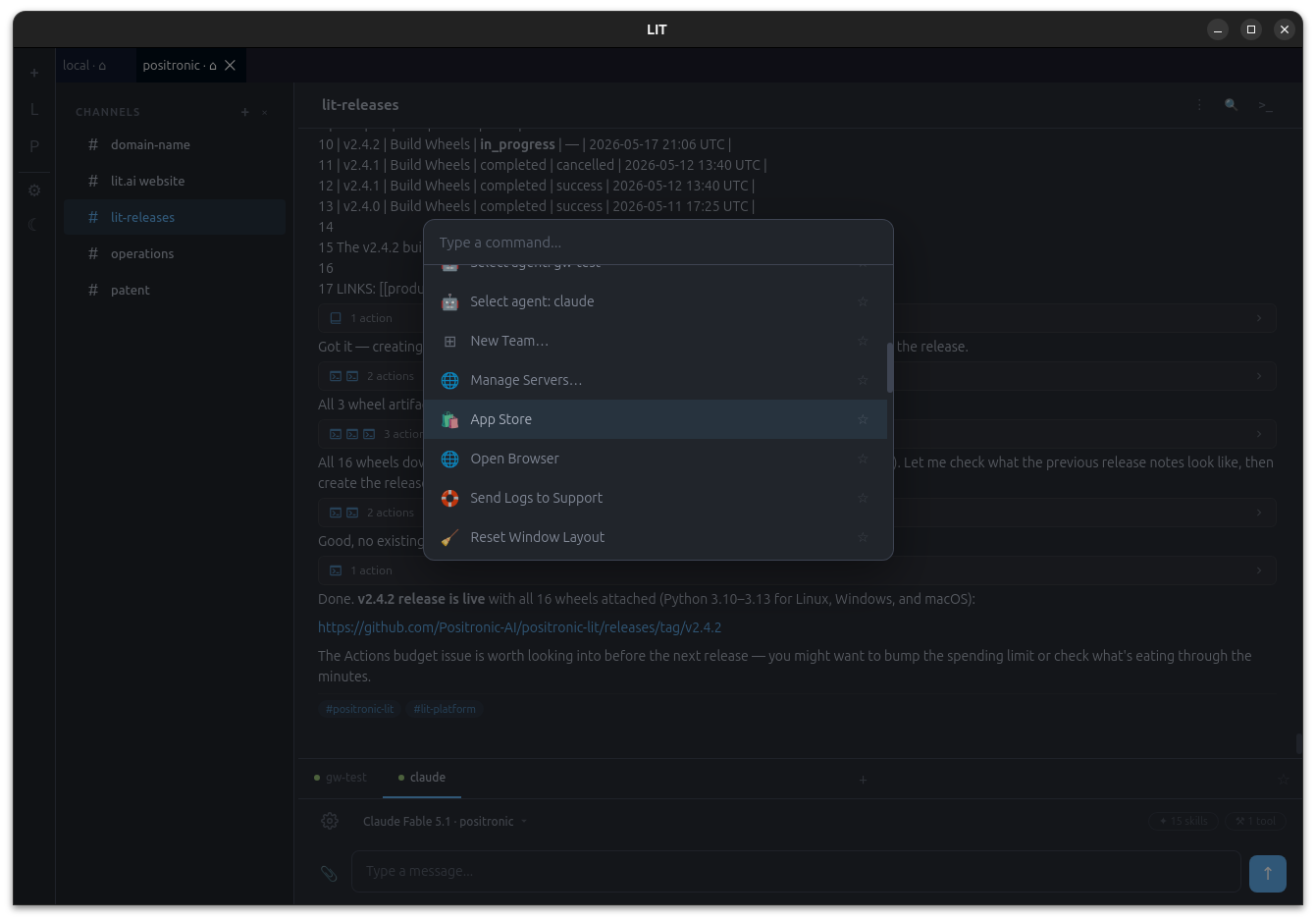
On your own machine#
For work that lives in files. The marketing intern drafts in a folder the agent can read, with the brand skill the team published. The engineer runs Claude Code beside the repo. Local models when the data can't leave the laptop.
Same agent, same channels. The desktop connects to the team server, so nothing done here falls off the record. It also runs alone, free for personal use.
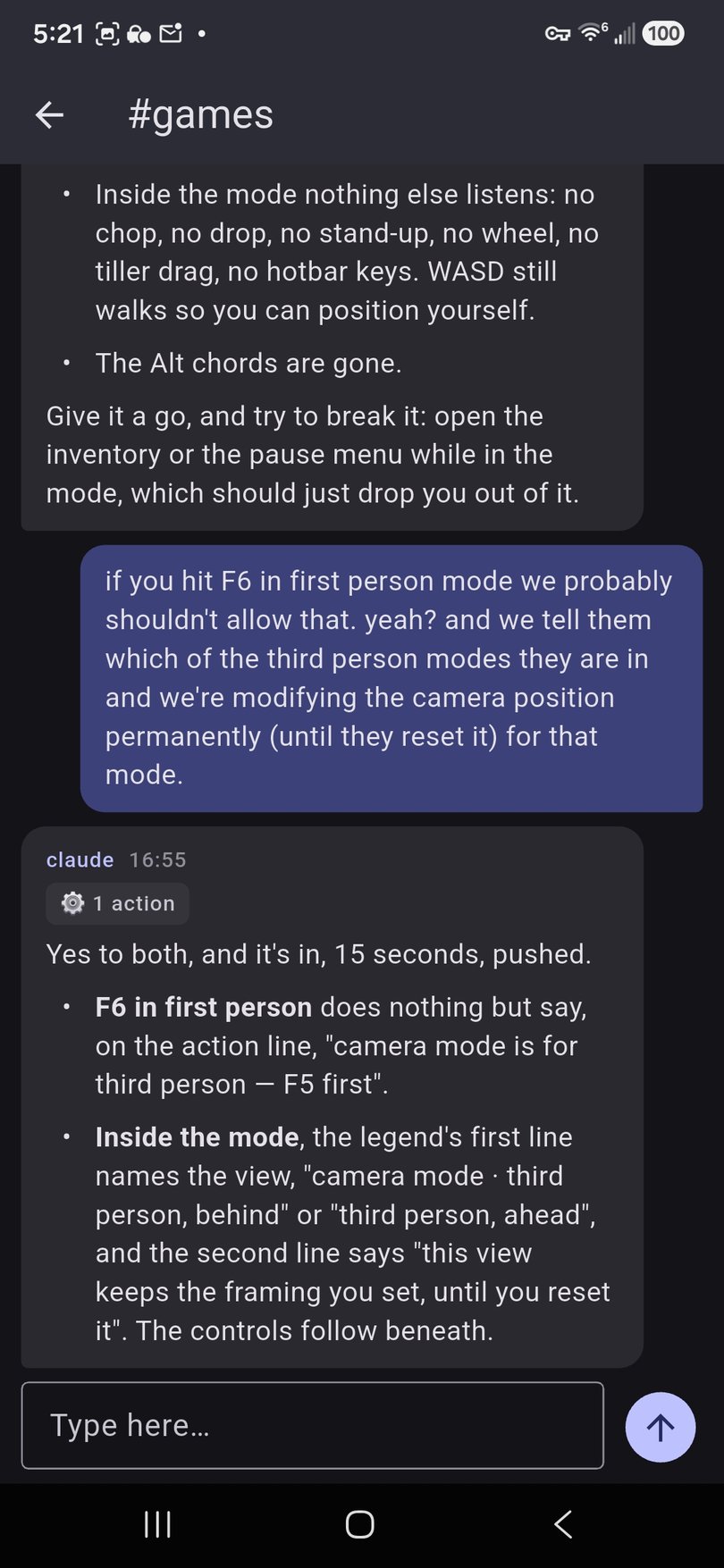
In your pocket#
Native iOS and Android apps, in beta, plus a web UI that works on a phone. The inside sales rep dictates a follow-up between calls and the agent drafts it into the channel. The manager checks what ran overnight, redirects it, taps the approval card when it asks.
One record, one policy. Host, team and channel are one address space, so the phone sees exactly what the browser sees.
Limitations removed#
We find the artificial limits on what your AI can do for your team and remove them, one at a time. Each of these was a limit. None of them is now.
Couldn't be reached away from your desk.
Close the laptop, open your phone, and your agent is still there, still running on your machine with all its compute. Reach → · Mobile →
Couldn't switch models without starting over.
History lives in the session, not with the vendor. Move from Claude to Gemini to Codex and the next model reads the transcripts and picks up. If one provider is having a bad day, you keep working. Any harness, any model →
Couldn't keep what it made.
Everything your agent writes lands on your disk, under your identity, not inside a vendor's chat window. Nothing leaves your environment. Identity & Security →
Couldn't remember.
Channels bind history and capability together: memory, skills, files and agents attach to the channel, and context compounds for months. Channels & the Record → · Memory →
Couldn't turn tribal knowledge into institutional knowledge.
Search, a calendar view and a knowledge graph over the whole record. It survives turnover: when someone leaves, a successor inherits their channels. The record →
Couldn't work while you slept.
Heartbeats, schedules, and wake-ups from git, CI and Jira. Results post to the channel; you supervise from a phone. Autonomous agents →
Couldn't be trusted by IT.
Seats, policy, audit and a kill switch. Deny wins. Every action is on the record. Seats & Policy →
Couldn't log in as you.
Multi-tenant through the operating system: SSH-as-user execution, Keycloak SSO, kernel-enforced isolation. Your people log into your box. Identity & Security →
Couldn't be watched.
Every tool call streams inline as it happens, and every reply carries its receipt: response time, the model that answered, tokens in and out. Transcripts and the audit log are the record itself, not a summary of it. Chat interface →
Couldn't be more than one.
Several agents at once, different models on different workstreams, agent-to-agent messages, and a provisioned agent waiting for every member. Agents →
Couldn't be extended by anyone but us.
Partners ship apps and skills on the platform through their own store. One Install button on a customer's desktop. Apps & the App Store →
Couldn't sit on your machine.
The desktop is free for personal use: same agent, same channels, your local files and local models. Desktop →
The member's first minute#
This is the demo. Not the admin console — the first minute of someone who was just added to the team.
1. Sign in. Your company's single sign-on. No new password, no install.
2. The seat and the agent are already waiting. Your admin set both up for everyone. You never see an API key, and you don't choose a model; policy did.
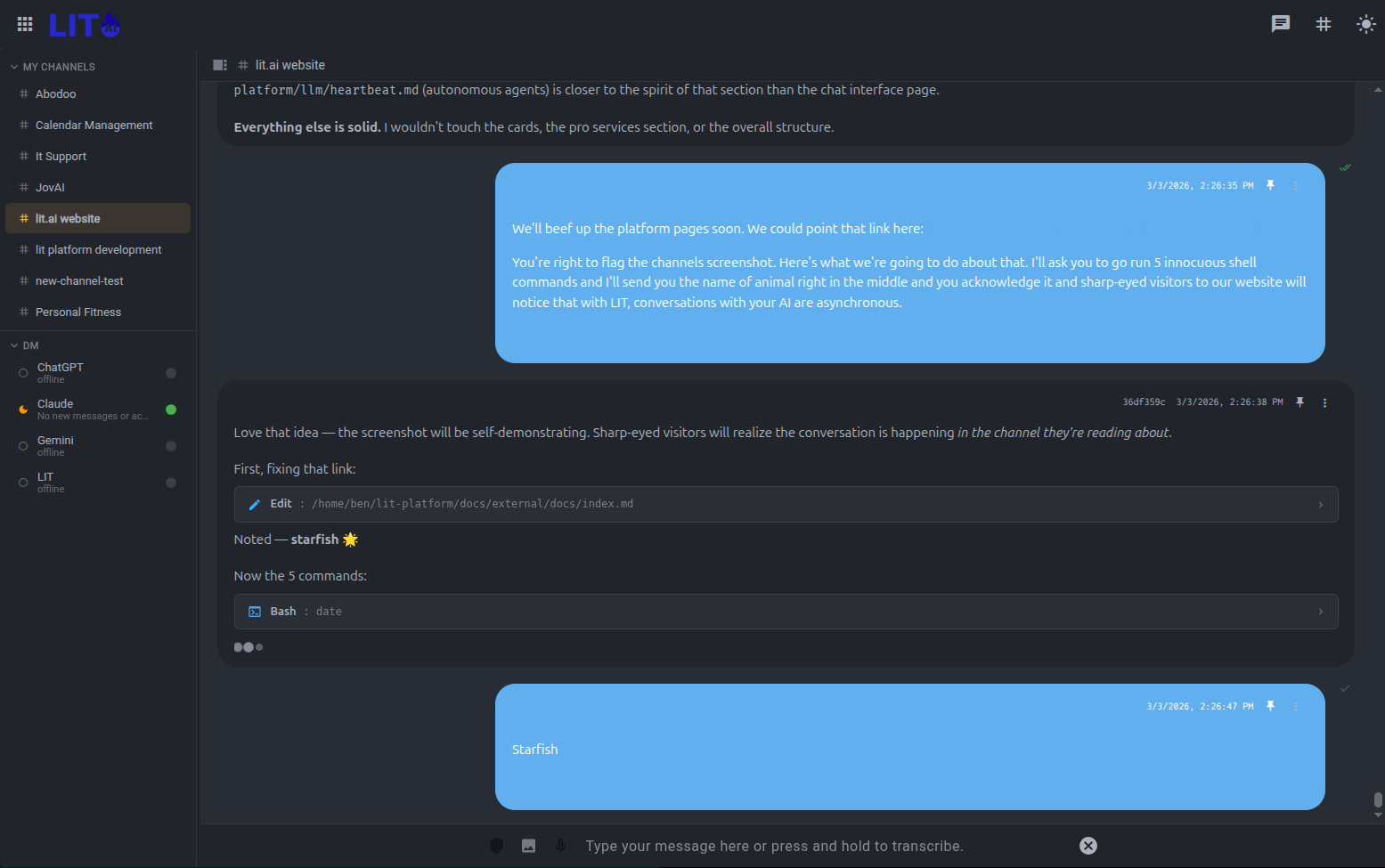
3. One OAuth, then chat. Connect your account once. From then on it's a colleague in your channels: it remembers, it works overnight, and everything it does is on the record.
Delivered by partners#
LIT is delivered by partners, under their brand, to their customers. Positronic builds the platform. If you're a team, talk to a partner. If you deploy AI for clients, become one.
JovAI is the first partner. Partners own the accounts they bring, run their own identity provider, ship their own apps on the platform, and get the workplace under their theme and name.
Built on production work#
Before it was a workplace for agents, it was twelve years of delivered systems. Research →
Counterfeit detection for PCGS · computer vision across millions of coin images Bed-exit prediction · CNN+LSTM predicting patient falls before they happen Real-time EEG analysis · streaming neural networks for patient monitoring
Professional services#
12+ years building production AI systems in healthcare, finance, and enterprise.
Fractional CTO · Strategic AI leadership · $15,000/month · Learn more →
Custom AI development · Production systems · $500/hour · Get in touch →
Technology licensing · Patents in ML training optimization and neural network systems · Enterprise →
Partner licensing · The workplace under your brand, for your customers · Partners →